
I’m so tired of seeing those “aesthetic” lifestyle influencers post about how to save on utility bills by buying $50 smart plugs or those overpriced, designer beeswax candles to “set a mood.” Honestly, if a solution requires you to spend more money just to feel like you’re saving, it’s a scam. Growing up in a tiny apartment where every cent counted, I learned early on that real efficiency isn’t about buying new gadgets; it’s about fixing what’s already broken and stopping the leaks you can’t see.
I’m not going to give you a list of trendy products that will end up in a landfill by next year. Instead, I’m sharing the actual, gritty tactics I use in my own place to keep my costs down without living in a dark, freezing cave. We’re going to focus on low-effort, high-impact moves—the kind of stuff that actually shows up in your bank account at the end of the month. No fluff, no expensive “hacks,” just straight-up functionality to help you keep your hard-earned cash where it belongs.
Home Insulation Techniques That Actually Work

Look, I’m not going to tell you to spend five grand on professional contractors to overhaul your entire attic. That’s not realistic for most of us. Instead, focus on the leaks that are literally sucking the money out of your wallet right now. Start with your windows and doors. If you can feel a draft, you’re basically paying to heat the neighborhood. Grab some weatherstripping or even just some heavy-duty caulk from the hardware store. It’s a cheap, weekend-warrior fix that falls under the category of energy efficient home improvements that actually yield a return. If you’re renting and can’t swap out windows, get some thermal curtains. They’re thick, they’re functional, and they act as a decent barrier against the chill.
Don’t ignore the “hidden” culprits either, like your electrical outlets on exterior walls. They might look fine, but air travels through them like it’s on a mission. You can get foam gaskets for pennies that slide right behind the faceplate. It sounds nitpicky, but when you’re looking at reducing monthly household expenses, it’s these small, cumulative wins that matter. It’s about plugging the holes in your budget just as much as the holes in your walls. Focus on the gaps, seal them up, and stop letting your hard-earned cash drift out the window.
Smart Thermostat Benefits Without the Hype
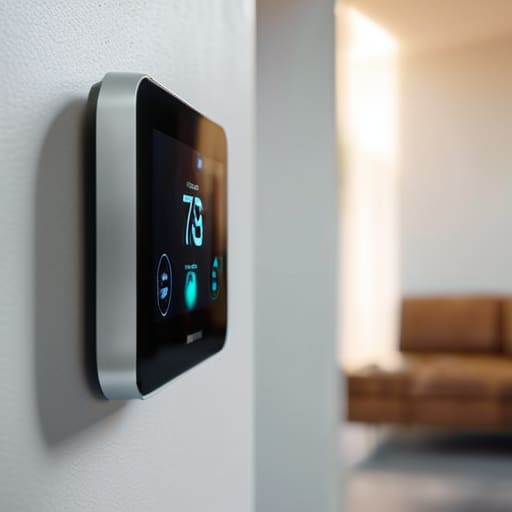
Look, I get it. Every tech influencer makes these gadgets look like some futuristic lifestyle upgrade that’s going to solve all your problems. But let’s strip away the marketing fluff: a smart thermostat isn’t a magic wand, it’s just a tool to stop you from heating an empty apartment while you’re at work. If you’re someone like me who’s constantly forgetting to adjust the temp before leaving for a shift, the real smart thermostat benefits come down to automation. It’s about setting a schedule so you aren’t fighting your HVAC system all day, which is one of those low-effort energy efficient home improvements that actually pays for itself if you stay consistent.
Don’t go out and buy the most expensive, shiny model just because it has a pretty interface. You don’t need a screen that looks like a smartphone; you just need something that connects to your Wi-Fi and lets you tweak the settings from your phone when you realize you left the AC blasting. It’s about reducing monthly household expenses by eliminating human error. If you can automate your heating and cooling cycles to match your actual life—not some idealized version of it—you’re winning. It’s not about being “smart”; it’s about being efficient with your cash.
Stop Letting Your Money Leak Out of the Walls
- Kill your “vampire” electronics. I swear, my power strip shows me just how much juice my monitor and gaming rig suck up even when they’re “off.” If it has a standby light, it’s costing you money. Use a power strip and flip the switch when you’re done for the day.
- Stop washing clothes in hot water unless you actually have to. Most of the energy your washer uses goes into heating the water, not the tumbling. Use the cold setting; modern detergents are designed for it, and your wallet will thank you.
- Clean your AC and heater filters every single month. I learned this the hard way when my unit started struggling in my tiny apartment. A clogged filter makes your system work twice as hard to do half the job, which is just throwing money into a furnace.
- Don’t be a hero with your water heater temperature. Most people have them set way too high by default. Dial it down to about 120°F (48°C). You’ll still get hot showers, but you won’t be paying to keep a tank of water at scalding temperatures 24/7.
- Use your kitchen strategically. If you’re cooking a small meal, stop preheating that massive oven for forty minutes. Use a microwave, an air fryer, or even a toaster oven. They use a fraction of the energy and get the job done way faster.
The Bottom Line
Stop paying to heat the outdoors; seal your windows and doors first, because even the smartest thermostat can’t fix a drafty room.
Don’t get sucked into the “smart home” marketing trap—only buy tech that automates a task you actually hate doing, or it’s just an expensive paperweight.
If a “hack” takes three hours of your time to save five bucks, skip it; focus on the high-impact changes that actually keep more cash in your bank account.
Cutting the Cord on Waste
Look, we’ve covered a lot, but it really boils down to this: stop letting your money leak out of your house through cracks in the windows and inefficient settings. Between sealing those drafts to keep the heat where it belongs and actually using a smart thermostat to manage your climate instead of letting it run wild, you’re already ahead of most people. It’s not about buying some expensive, high-tech ecosystem that promises to change your life; it’s about making small, intentional adjustments to the systems you already have. If you aren’t fixing the insulation or monitoring your usage, you’re basically just handing your paycheck to the utility company for no reason.
At the end of the day, saving money isn’t about living in a dark, freezing cave just to see a lower number on your statement. It’s about being smart with your resources so you have more left over for the stuff that actually matters—like a decent meal, a new mechanical keyboard kit, or just having a bit of a buffer in your savings. Don’t get caught up in the “perfect” lifestyle influencers show you; just focus on what works for your space and your budget. Start with one thing today, fix it, and move on to the next. You’ve got this.
Frequently Asked Questions
Is it actually worth spending money on weather stripping if I'm renting an apartment?
Honestly? Yes. If you’re renting, you probably don’t have the budget for a full insulation overhaul, but weather stripping is a cheap, low-effort win. It’s basically a bandage for your wallet. Grab some foam tape or a door sweep from the hardware store—it takes ten minutes to install and you can take it with you when you move. Stop letting your expensive AC leak out through the cracks in your front door.
How much of a difference does unplugging my electronics really make, or is that just a myth?
It’s not a total myth, but it’s also not the magic bullet people claim it is. We’re talking about “vampire power”—those little bits of energy your charger or coffee maker sucks up even when they aren’t doing anything. On their own? It’s pennies. But if you’ve got a whole setup of gaming rigs, monitors, and speakers all idling? That adds up. Grab a power strip, flip the switch when you’re done, and stop feeding the vampires.
Should I bother switching to LED bulbs now, or is the upfront cost too high to see a real return?
Look, don’t overthink the math, just do it. I know the upfront cost feels annoying when you’re already pinching pennies, but the ROI on LEDs is insane. They pull a fraction of the wattage and actually last years, so you aren’t constantly buying cheap incandescent bulbs that burn out every month. Stop stalling. Swap the high-draw bulbs in your main living areas first; you’ll see the difference on your next bill.
Are those "energy-saving" power strips actually doing anything, or am I just buying more plastic?
Look, I get it. Most of that “smart” gear feels like marketing fluff designed to clutter your junk drawer. Here’s the truth: standard power strips do nothing for your bill. But “advanced” ones with built-in sensors? They actually work for your setup. They cut power to peripherals—like your monitor or printer—when your main PC goes to sleep. It stops that “vampire drain” from eating your cash while you’re sleeping. If you have a lot of idle tech, it’s worth the buy. Otherwise, skip the plastic.